


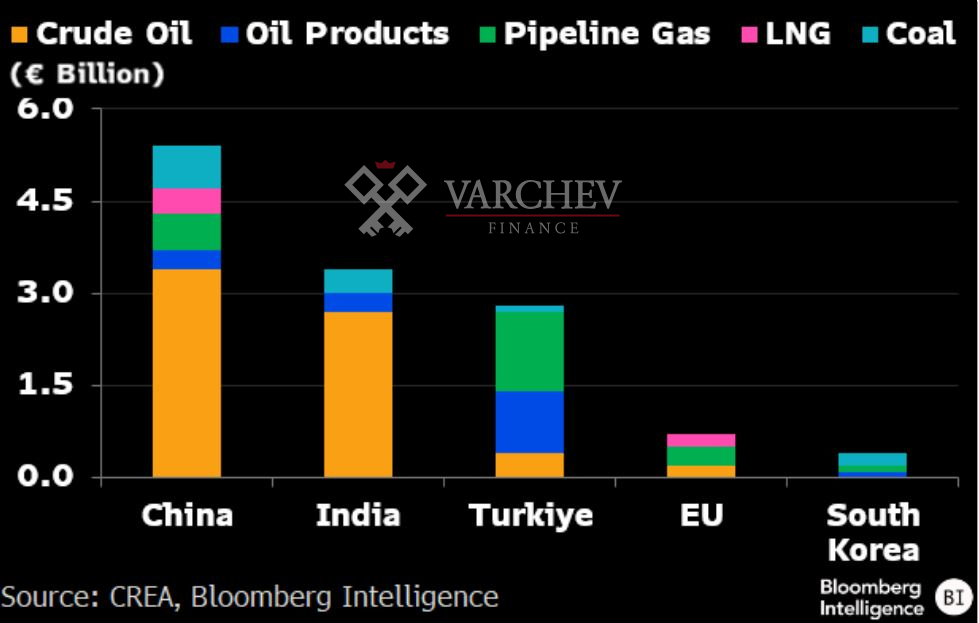
Investor concerns about oil supply are likely to remain low in the coming months, as the risk of supply chain disruptions continues to ease. U.S. President Donald Trump’s decision not to confront China over its purchases of Russian crude oil reduces geopolitical tensions and temporarily stabilizes markets.
The agreement between the two countries to cut tariffs and increase China’s imports of U.S. energy and agricultural goods suggests a more constructive tone in trade relations. Still, Chinese exports and energy consumption are expected to remain below pre–trade war levels, while WTI prices are likely to hover around $60 per barrel.
1. The U.S. stance on China’s purchases of Russian oil signals a temporary shift in priorities
The U.S. appears to be shifting its focus from direct confrontation to strategic balance with China. Trump’s decision not to pressure Beijing over its Russian oil imports could temporarily reduce supply shock risks and provide stability to global energy markets.
The ongoing negotiations with China — which include tariff reductions and commitments to purchase U.S. energy products — indicate that the U.S. may be seeking a more flexible approach ahead of the elections. If this cooperation deepens, markets could respond with a moderate short-term increase in oil prices.
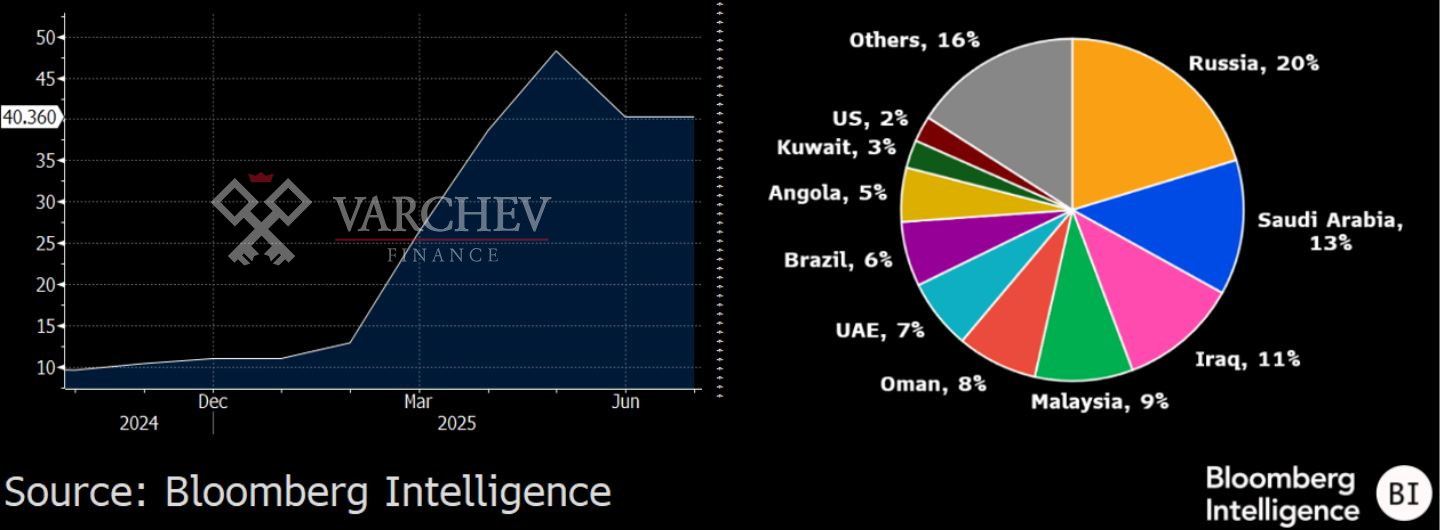
2. Russia Increases Oil Exports Despite Damage to Refineries
Despite the attacks on Russian refineries, Moscow has increased its exports by about 170,000 barrels per day, demonstrating the resilience of its energy system. The main buyers remain China and India, which together account for over 85% of Russia’s oil exports.
If China maintains or increases its purchases of Russian crude, this could limit global demand for alternative (non-Russian) oil, thereby keeping pressure on WTI and Brent prices contained.
3. U.S. Tariffs Threaten Industrial Production and Traffic in China
U.S. tariffs on Chinese goods are hitting industrial activity and domestic consumption in China, leading to a decline in demand for petroleum products.
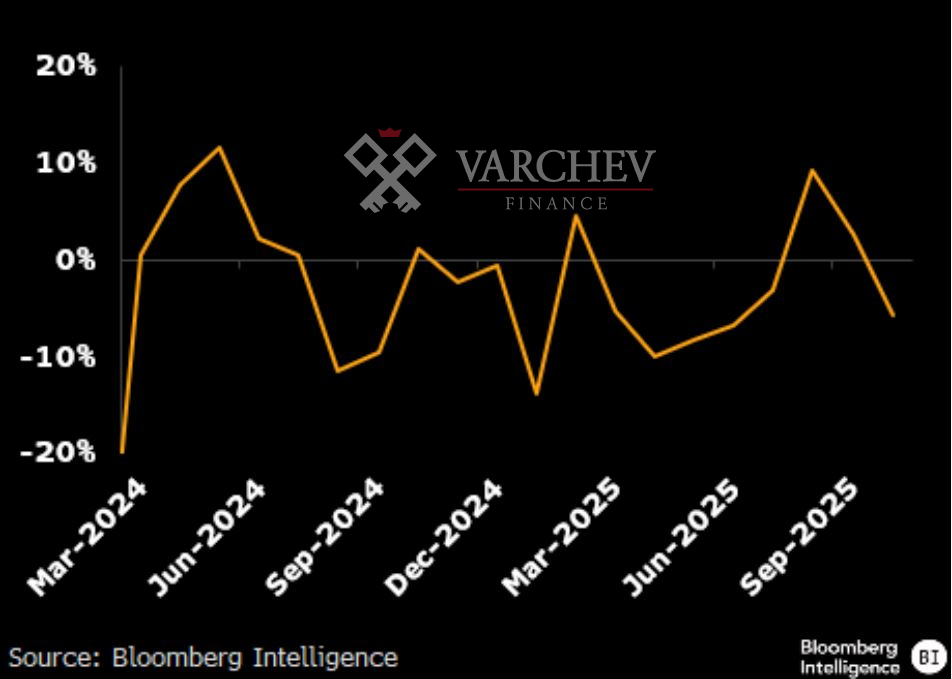
Data from Baidu show that the road congestion index in China’s 15 largest cities fell by 4.6% between April—when the U.S. first announced the tariffs—and October.
During the same period, independent Chinese refineries have been operating at below 50% capacity, while industrial output growth slowed to 6.5% in September, compared to 7.7% in March, signaling weaker demand for diesel and fuel.
Although a 10% reduction in U.S. tariffs could support Chinese exports and energy demand, a full recovery to pre-trade-war levels remains unlikely. (Nov 3, 2025)
Varchev Absolute Trader
борсова платформа
- Търгувай над 3000 финансови инструмента: Crypto, Форекс, Акции, Индекси, Суровини, ETF-и
- Използвай платформа с директно изпращане ордерите на борсите
- Cloud base платформа - твоят трейдинг сетъп на всяко устройство
- Market Sentiment - търгувай с настроенията на инвестиционите банки
- Top movers - най-горещите трейдове във всеки един момент
- Stocks scanner - филтрирай най-подходящите за твоя трейдинг стил пазарни инструменти
- Heat map - Търгувай в посоката на големите играчи
Meta Trader 5
- Търгувай Crypto, Форекс, Акции, Индекси, Суровини - всичко на едно място
- Автоматизирана търговия с интелигентни стратегии и роботи (Expert Advisors)
- Разширен технически анализ с хиляди индикатора и инструменти
- Сигурност и стабилност – платформа, доверена от милиони по света
- Нулев марджин при насрещни/хеджирани позиции
- Без комисиона при търговия със CFDs
- Светкавично изпълнение на сделките
Read more:

Login to comment
Comments:
Leave a comment